New impulses for the network: An interview with the new partner institutions of explore dance
Strengthening contemporary dance for young audiences together in a sustainable way
explore dance has gained two strong new partners with Künstler*innenhaus Mousonturm in Frankfurt am Main and Perform[d]ance in Stralsund. These two institutions now not only expand the network’s platform to six partners from six different cities and federal states, they also contribute their own artistic profiles and experiences in working with young audiences
Künstler*innenhaus Mousonturm, one of Germany’s most important centres for dance, theatre and performance, has a wealth of experience in making art accessible to young and diverse audiences. Perform[d]ance, which specialises in contemporary dance and community dance, regularly stages classroom performances in schools and at festivals, inspiring children and young people to take an interest in contemporary dance.
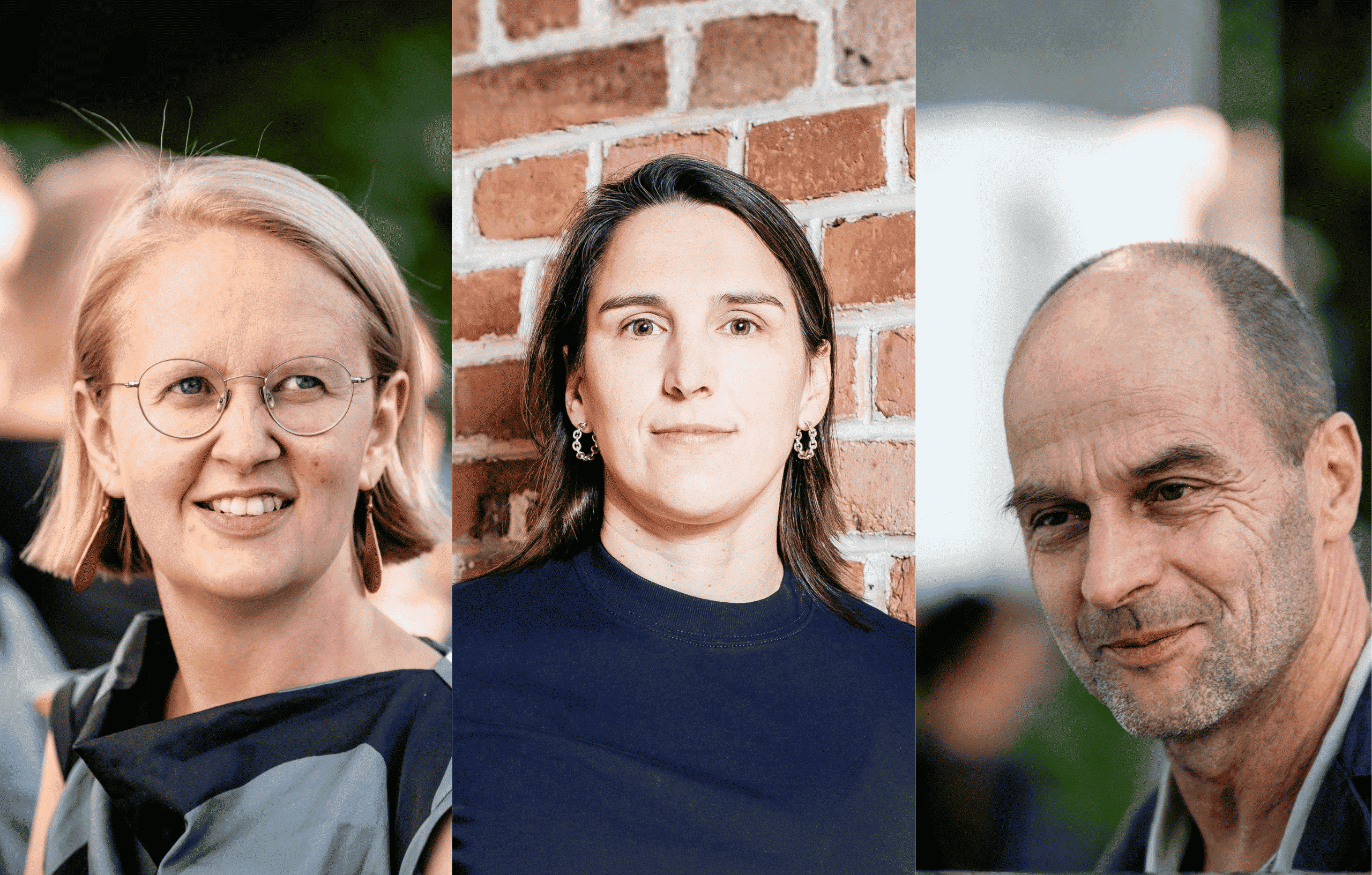
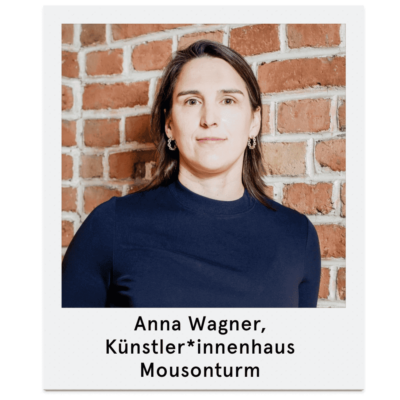
In this interview, Anna Wagner, artistic and executive director of Künstler*innenhaus Mousonturm, as well as Dörte Wolter and Stefan Hahn, manager and artistic director of Perform[d]ance respectively, talk about their motivations for becoming part of explore dance, their main areas of focus, and what they hope to contribute to the network – and receive from it.
A conversation about visions, challenges and the shared goal of sustainably strengthening contemporary dance for young audiences.

explore dance Editorial Team | 22 October 2025
What motivated you to become part of the explore dance network?
Anna:
At Mousonturm, we have been producing dance pieces for young audiences and inviting pieces that focus on young audiences for several years now. Being part of a prestigious nationwide network dedicated to this field on many levels is a great gift for us.
Dörte:
Perform[d]ance has produced six classroom pieces since 2018 – a format very similar to the explore dance Pop-Up. A dance production visits students in their classroom for three school hours – in a triad of workshop, performance and post-performance discussion, contemporary dance is brought directly into everyday school life. We attended explore dance festivals and performances from an early stage and engaged in intensive exchanges with colleagues about experiences and formats. For several years now, we have been involved in concrete collaborations with almost all of the network partners, including within the framework of the Tanz weit draußen Network. These collaborations then led to discussions about joining the explore dance network.
What would you like your institution to contribute to the network – and what do you expect to gain from it?
Anna:
Through the creation of the “Zentrum Junger Tanz” (“Centre for Young Dance”), based at Mousonturm since the 2025/26 season, we are introducing a holistic approach to “dance for and with young audiences”. We combine viewing experiences of dance with various formats that encourage children and young people to dance for themselves, and we also train dance professionals and educators in the field of dance. We focus on three building blocks: dancing for yourself, watching dance, and teaching dance.
First of all, we are naturally looking forward to many exciting dance productions that will be created as part of explore dance. We also hope that, as part of explore dance, we will be able to draw more attention and visibility to this important artistic field and inspire dance professionals, cultural policymakers and other key players in the field. We will certainly benefit greatly from the experience and expertise of the explore dance partners and hope to share this knowledge with other organisations in our field.
Dörte:
Unlike our other partners, we are based in a town with just under 60,000 inhabitants in a sparsely populated county. For 20 years, we have been running dance in schools projects similar to those of our colleagues in Munich and know many schools. Over the last seven years, our contacts have slowly but steadily expanded throughout the state, even if there are still some gaps.
Stefan:
We have touring experience both within the federal state and internationally. We have also adapted four of our previous productions for the stage. We have a venue for 130 spectators in Stralsund, which is wonderful for showing dance to young audiences, but also of course for producing it. Within the network, we want to make use of these opportunities together and thus also more sustainably.
In your opinion, what can the art form of dance offer young audiences in particular?
Stefan:
A great deal, and not just for young audiences. We are fascinated by its complexity. We want to produce dance pieces that inspire us as adults just as much as they inspire children and young people. We are also happy to dispense with language in our productions, because dance often tells (so much) more (than) stories.
Anna:
Dance has a special potential – beyond verbal expression, it simultaneously appeals to the senses, motor skills and cognition. These are abilities that we unfortunately lose with age, but which need to be activated and maintained at an early stage. In its diverse forms of expression, dance provides spaces for experience in which we can not only endure the tense, contradictory dynamics of our present, but also explore them and creatively shape them ourselves. Dance fosters relationships and encounters by unfolding in the interplay between self-perception and the observation of others, between dancing oneself and the reception of dance.

Nora Elberfeld: 1004 Zentimeter Mut, Photo: Jonas Albrecht
Are there any topics, formats or communication strategies that you, as new partners, would particularly like to promote with explore dance?
Stefan:
Our main concern is to continue to give young people in rural areas access to dance performances and to return to these places with ever new productions. At our own venue, we want to try out offering performances with audio descriptions for the first time. This is something we are currently looking forward to.
Anna:
There are, of course, many issues that we would like to promote. One particular concern for us is to focus even more strongly on very young audiences. We would also like to focus more on issues of accessibility, i.e. the participation of people with disabilities as spectators, participants and artistic producers.

Stefan Hahn: Augenhöhe – Klassenzimmerstück Tanz, Photo: Peter van Heesen
What specific plans do you have for your first season in the network?
Anna:
We will invite three performances from the explore dance portfolio. We are also planning to develop a new production which we will then present across the region and hopefully also at the venues of the explore dance partners.
We are also very pleased that we are showing our piece Ein Raum ohne Wände (“A Room without Walls”), which we produced in 2024, within the explore dance network.
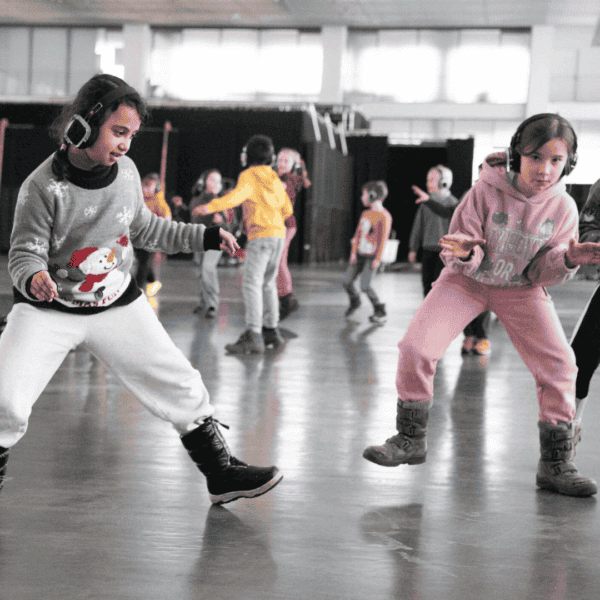
LIGNA: Ein Raum ohne Wände, Photo: Julius Schmitt
Dörte:
In January, Anna Till’s production Schwanensee in Sneakers (“Swan Lake in Sneakers”) will come to the Alte Eisengießerei, our venue in Stralsund. We are combining the performance with short pieces by young people and a dance film that is currently being created with the youth company. Hopefully, further guest performances by other productions will follow this season. Laura Gary, who is currently developing a piece in Potsdam, also teaches with us two days a week. Through the network, we have already been able to expand our team.
Through the network, we have already been able to expand our team. And, of course, there will also be a new production, preferably for grades 5/6. We have received repeated requests from teachers, especially for this age group. Naturally, we look forward to exchanging ideas with our colleagues and hope to strengthen our structures, but further federal funding is essential for this.

Anna Till & Nora Otte: Schwanensee in Sneakers, Photo: Stephan Floss
Johanna Ackva & Laura Gary: Ritournelles, Photo: fabrik Potsdam
Is there any inspiration from your previous work with young audiences that you would like to share?
Stefan:
It is not always easy to get the Stralsund audience excited about a new piece. That is why we have developed a format in which we combine a production for young audiences by professional choreographers with short pieces by various Perform[d]ance amateur dance groups. The format is called “Choreos kurios” and aims to spark curiosity about different choreographic styles. The encounter between professionals and young people is heart-warming – because some of them are considering studying dance and then ask the professional dancers about their everyday lives and which university or training programme they would recommend. And the audience is also enthusiastic about this combination.
Dörte:
Last May, ZINADA visited us with the explore dance pop-up WUW – Wind und Wand (“Wind and Wall”) and even much later, we continued to receive many personal messages – both from ZINADA, who were enthusiastic about the creative ideas of the dancing young people, and from the young people themselves, who found it very rewarding to be able to perform in front of the professional dancers, not as a support act, but as part of a truly shared evening.

ZINADA: WUW – Wind und Wand, Photo: Christina Gerg
Anna:
In our projects, such as the piece Ein Raum ohne Wände (“A Room without Walls”) or dance projects in schools, which we organise together with children and young people, we often see that many of them face their own fears by opening themselves up to movement and dance. This courage gives us strength and shows that it is worthwhile to promote dance for young audiences and to create structures and visibility. Hopefully, as a network now operating in six federal states, we will once again receive substantial funding from the federal government. This would enable us to really get started together and achieve great things.